Skip to content
Orca Jones
AI consulting · British Columbia

New tools every week, vendors promising everything, and someone upstairs asking what your AI plan is. Orca Jones tells you what's worth doing, builds it with you, and sticks around while it settles in.

Everyone's talking about AI. Almost no one is explaining it.

Orca Jones is an AI consulting firm based in British Columbia, Canada. We help mid-sized companies and operations teams work out where AI is actually worth using, then build and roll out the tools and automations that make it stick. That covers AI strategy and readiness, workflow automation, custom AI tools, team training, vendor selection and ongoing advice. We work in person across BC and remotely across Canada.

Most operations teams aren't behind on AI because they're slow. They're behind because nobody has given them a straight answer about what it's good for in their business, what it costs, and what can go wrong.

That's the job. We sit down with how your work actually gets done, find the few places where AI saves real hours or prevents real mistakes, and build those properly. Then we teach your team to run them.

What we do

Six ways in. Most clients start with one.

All services

AI strategy and readiness

Work out where your company actually stands, where AI pays off, and what to ignore.

Full details →

AI strategy and readiness work tells you where your company stands today, which two or three uses of AI would pay off first, and which to skip. We look at your data, processes and people, rank the options by effort and risk, and hand you a plan your leadership team can follow.

Who it's for

Leadership teams who have been asked for an AI plan and want an honest answer before spending money on tools.

What you get

  • A ranked list of where AI could help, with effort and payoff for each
  • A plain answer on what to ignore for now
  • A 90-day plan your leadership team can actually follow

Workflow automation

Map the repetitive work your team does by hand, then automate the parts that are safe to automate.

Full details →

Workflow automation connects the tools you already use so repetitive jobs run themselves: sorting inbound email, reading documents, updating your systems, assembling weekly reports. We map the work first, build the automation in n8n or a similar platform, and keep a person in the loop wherever a mistake would be costly.

Who it's for

Operations leads whose team spends hours each week copying, pasting, chasing and re-keying information between systems.

What you get

  • Intake emails sorted, summarised and routed without copy-paste
  • Documents read, checked and filed into the right system
  • Reports that assemble themselves on Monday morning

Custom AI tools

Purpose-built internal tools for the jobs off-the-shelf software gets wrong: documents, estimates, leads, reporting.

Full details →

Custom AI tools are small, purpose-built applications for the jobs generic software handles badly: reading contracts and specs, drafting estimates from past jobs, qualifying inbound leads, or pulling reports from messy data. We build them around how your team works, and every tool keeps a person in charge of the final call.

Who it's for

Companies with one stubborn, high-value job that off-the-shelf software and automation platforms cannot handle well.

What you get

  • Document analysis for contracts, strata files or specs
  • Estimating and quoting helpers trained on your past jobs
  • Lead qualification that drafts, but never sends on its own

AI training and enablement

Get your team fluent and confident with AI, so the tools get used properly instead of quietly abandoned.

Full details →

AI training teaches your team to use AI on their own real tasks: drafting, summarising, checking documents, preparing for meetings. We run hands-on sessions with your actual files and workflows, write a short AI use policy people will read, and leave behind internal champions who can answer the next question.

Who it's for

Teams that already pay for AI tools, or are about to, and want people to use them well and safely.

What you get

  • Hands-on sessions built around your team's real tasks
  • A short, sane AI use policy people will actually read
  • Internal champions who can answer the next question

Vendor and tool selection

Cut through vendor pitches, choose what fits how you work, and avoid expensive mistakes.

Full details →

Vendor and tool selection helps you choose AI software based on how your team works, not on who pitched hardest. We define your requirements, build a shortlist, ask vendors the awkward questions about data, security and lock-in, and run a small pilot with a clear yes-or-no at the end.

Who it's for

Companies about to sign for an AI product, or already overwhelmed by pitches, who want an independent opinion first.

What you get

  • A shortlist matched to how you work, not to who pitched hardest
  • Questions to ask vendors about data, security and lock-in
  • A pilot plan with a clear yes-or-no at the end

Ongoing advisory

A steady, technically fluent guide on call while the AI landscape keeps shifting under you.

Full details →

Ongoing advisory gives you a technically fluent guide on a monthly basis. We check what has changed in AI tools and what it means for your business, review projects in progress, give a second opinion before you sign anything, and are reachable when something breaks or a model changes underneath you.

Who it's for

Leaders who have started using AI and want someone dependable to check their thinking as things keep changing.

What you get

  • A monthly check-in on what's changed and what it means for you
  • A second opinion before you sign anything AI-shaped
  • Someone to call when a tool breaks or a model changes

How we work

Four steps. No slide decks for the sake of it.

  1. Step 1 · Listen

    We start with your week, not with AI.

    Where does time go? What gets done twice? What breaks when one person is on holiday? We talk to the people doing the work, not just the people managing it.

  2. Step 2 · Map

    Then we find the few places it pays.

    Every idea gets an honest read on effort, payoff and risk. Most companies need three good projects, not thirty. We'll also tell you what not to bother with.

  3. Step 3 · Build

    We build the smallest useful thing first.

    Working software in weeks, not a slide deck in months. A person stays in the loop wherever a mistake would cost you a client, money or trust.

  4. Step 4 · Stay

    And we stick around while it settles.

    Your team learns to run it. We measure whether it's actually helping. When the models change next quarter, and they will, we adjust it.

Builds

You don't need more AI hype. You need someone who's already tried it.

Before advising anyone, we built our own AI products from scratch. Here's what's shipped, and what each one taught us.

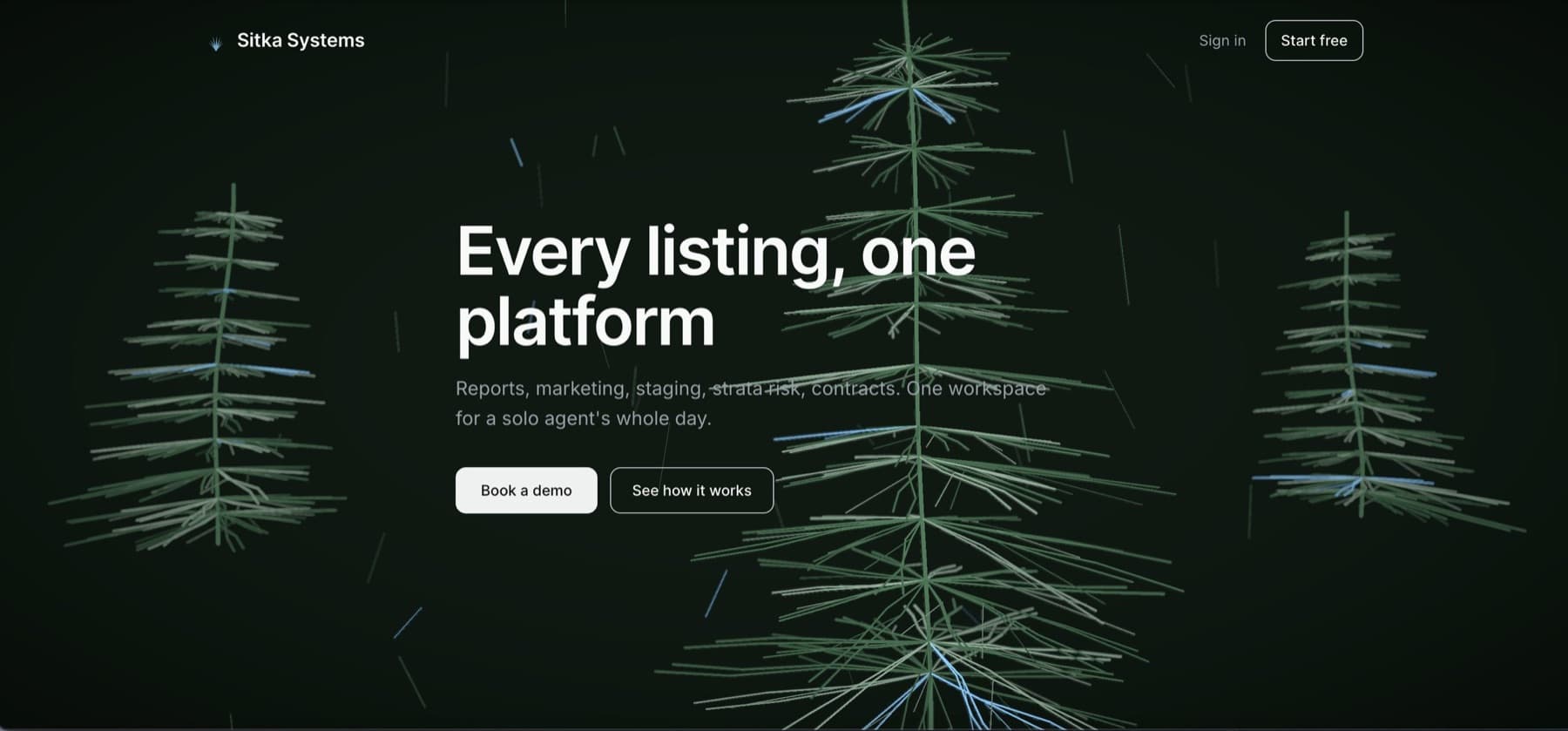
Sitka Systems homepage: dark green background with stylised conifer trees and the headline 'Every listing, one platform'.
Built, going into demoReal estate · SaaS · Automation · n8n

Sitka Systems

One workspace for a BC real estate agent's whole day.

A real estate platform built from scratch under Orca Jones. It drafts seller reports, writes listing marketing, stages empty rooms, ranks strata risk and marks up contracts.

Underneath sit four pieces: a listing marketing suite, a strata document analyzer that reads the paperwork nobody else will, an email and reporting dashboard, and a lead qualification pipeline running on n8n.

Nothing sends on its own.

Email is drafted and queued for a person to approve. That's a deliberate limit, not a missing feature. Software that can mail a client unsupervised is a liability dressed up as a convenience.
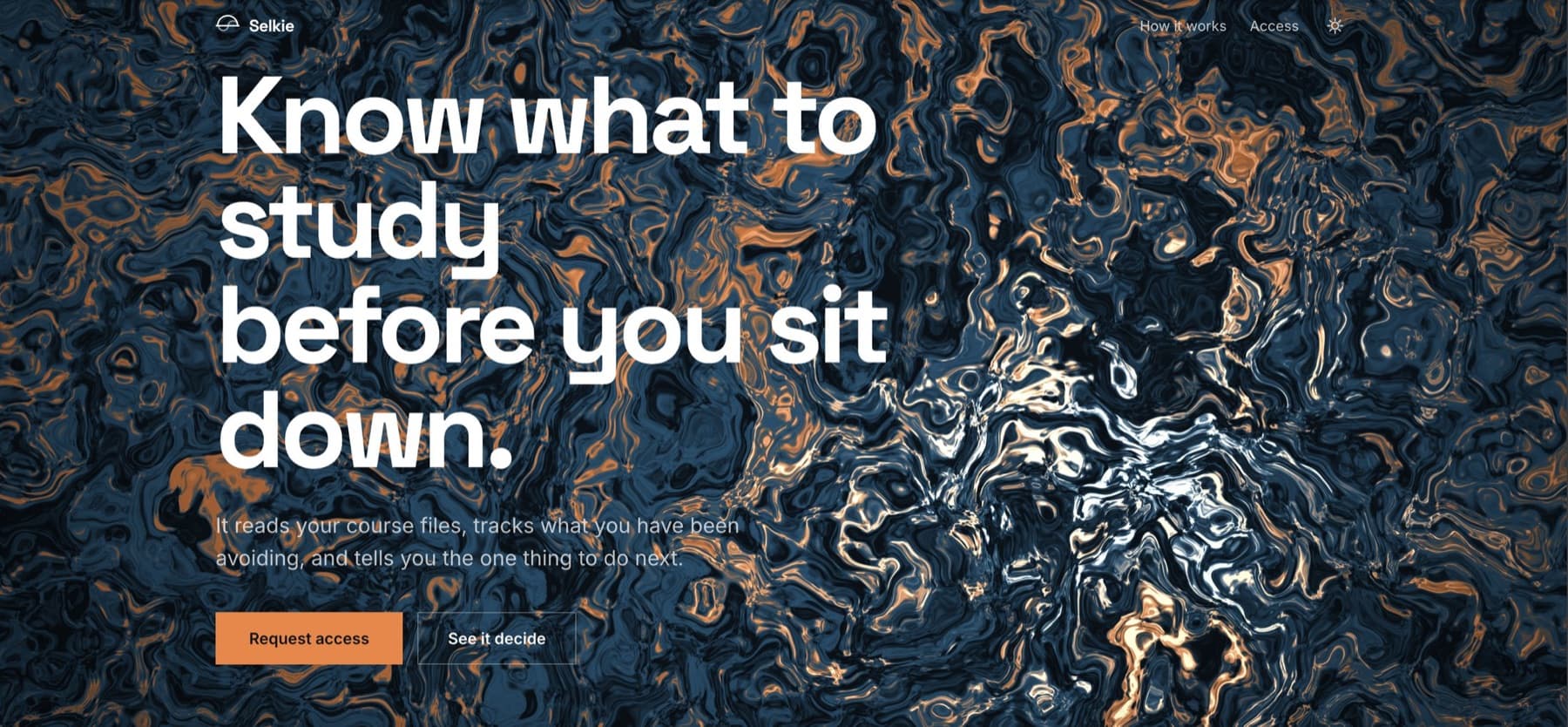

Selkie homepage: swirling navy and orange liquid texture behind the headline 'Know what to study before you sit down.'
Live, in daily useEducation · AI · Wearables

Selkie AI

An academic planner that reads the course, not the calendar.

Built for students who are oversubscribed rather than disorganised: a degree, a varsity sport, something running on the side. Selkie pulls in course files (syllabus, briefs, deadlines, notes, practice material) and ranks coursework and training on one scale.

That ranking weighs deadline proximity, time since you last touched something, and recovery data from a smartwatch. It drafts replies to course email and stops there.

The hard part was the ranking, not the reading.

An essay due Friday and a training session your body is too wrecked to take are the same kind of decision. They had to end up on one scale, not in two apps that each ignore the other. Most business problems look like that too.

More on our builds

Free AI readiness assessment

How deep are you, really?

Twelve quick questions about your goals, your team and how your work gets done. The plan adapts with every answer, and in about three minutes you get the package we'd recommend, why each part is in it, and how it would run. No grades.

Brendan Jones, founder of Orca Jones, smiling in a dark blazer
Brendan Jones · Founder

Founder note

A real person, who builds the things he recommends.

I'm Brendan. I started Orca Jones by building AI products from scratch: Sitka Systems for BC real estate agents, and Selkie AI for students who have too much on their plate. Every one of them started the same way. Find the job somebody is still doing by hand, then build the thing that does it properly.

Building them taught me where AI earns its keep and where it quietly makes a mess. It's why nothing I build for a client sends an email on its own. Software that can mail a client unsupervised is a liability dressed up as a convenience.

If you're tired of AI hype and just want someone to tell you straight what's worth doing, that's the conversation I like having.

Brendan Jones, founder

More about how we work

Questions

Straight answers.

All questions →

What does an AI consultant actually do?

An AI consultant helps you decide where AI is worth using in your business, then helps you put it to work. At Orca Jones that means assessing your workflows, ranking the opportunities by payoff and risk, building or configuring the tools, training your team, and checking the results. We build as well as advise, so the advice is grounded in what actually works.

How do we know if our company is ready for AI?

Readiness comes down to four things: how organised your data and documents are, how repeatable your processes are, how open your team is to new tools, and whether leadership has a clear reason to adopt AI. Our free AI readiness assessment looks at all four in about three minutes and recommends where to start, without grading you.

How much does AI consulting cost?

We don't publish fixed prices because engagements vary a lot. A focused readiness review is a very different job from building a custom tool. Every project is scoped up front with a fixed price or a clear monthly fee, so there are no surprises. The assessment and a first call are free.

Do you only work with companies in BC?

We're based in British Columbia and work in person across Metro Vancouver, the Fraser Valley, Victoria and the Okanagan. We also work remotely with companies across Canada. Most of the work happens over video calls and shared documents anyway, with on-site visits when they help.

Will AI replace people on our team?

In the mid-sized companies we work with, the realistic goal is taking repetitive work off people's plates, not removing the people. AI is good at reading, sorting, drafting and summarising. It's bad at judgement, relationships and accountability. We design tools that keep a person in charge of decisions that matter.

We already pay for AI tools nobody uses. Can you help?

Yes, and it's common. Usually the tool isn't wrong, it just never got connected to how the team actually works. We look at what you already have, keep what fits, cut what doesn't, and train people on the parts that save them time. Sometimes the cheapest win is using what you've already bought.